For many high school and college students across the United States, the true “test” of adulthood doesn’t happen during a high-stakes mid-term exam or within the four walls of a lecture hall. While academic excellence is the cornerstone of the American education system, there is an unspoken curriculum that exists in the “in-between” moments—the part-time jobs, the organized sports, the volunteer hours, and the daily grind of managing a social life.
As students transition from high school to higher education and eventually into the professional workforce, they realize that their GPA is only one part of the equation. To truly succeed in the competitive landscape of the USA, one must master a set of essential life skills for college students—often referred to as “soft skills”—that textbooks simply cannot teach.
In this deep dive, we explore what students learn outside the classroom and how these experiences shape the leaders of tomorrow.
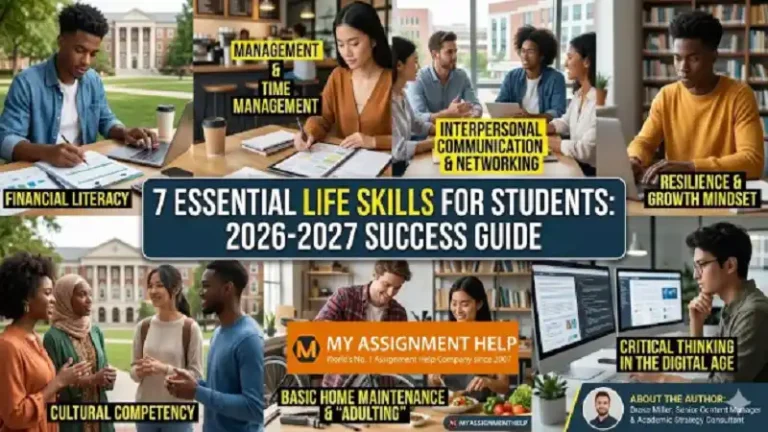
1. The Art of Financial Literacy and Budgeting
In the US, the transition to independence often comes with a sharp reality check: the rising cost of living. Whether it’s managing a small allowance, a paycheck from a summer job at a local diner, or a complex financial aid package involving FAFSA and private student loans, students learn the value of a dollar early on.
While some schools offer basic home economics, the real learning happens in the “street-smart” laboratory of the real world. Outside the classroom, students learn:
- Prioritizing Needs vs. Wants: Deciding between the latest tech gadget and saving for next semester’s textbooks. This involves understanding the 50/30/20 rule of budgeting. If your budget is tight but your workload is overflowing, some students choose to purchase essay online services to free up time for high-priority financial commitments.
- Understanding Credit: Navigating the world of credit cards and the importance of a credit score. This is a vital concept for future apartment rentals and car loans in the US, where a “thin file” can be a major hurdle.
- The Gig Economy: Many students engage in side hustles, from tutoring to food delivery apps. This teaches them about tax withholding (1099 forms), self-employment expenses, and profit margins long before they start a full-time career.
2. Time Management in a High-Pressure Culture
The American “hustle culture” starts young. A typical US high school student isn’t just a student; they are an athlete, a member of the debate club, a volunteer at the local shelter, and a part-time employee. Mastering student productivity and life balance is a survival skill.
In the real world, there are no extensions without consequences. Students learn to use digital calendars, set reminders, and apply frameworks like the Pomodoro Technique or Eisenhower Matrix to stay afloat. Learning to balance these conflicting priorities ensures that when they reach the professional world, they can handle multi-project workflows without breaking a sweat.
3. Interpersonal Communication and Networking
Classrooms are controlled environments where communication is often one-way. However, the professional world is collaborative. Through extracurricular activities and the local workforce, US students learn:
- Conflict Resolution: Resolving a disagreement with a teammate on the field or a coworker at a retail job. This involves de-escalation tactics and finding a middle ground.
- Active Listening: Understanding that communication is as much about hearing and validating as it is about speaking.
- The Elevator Pitch: In a culture that prizes self-promotion and “who you know,” students learn how to introduce themselves confidently and articulate their goals to mentors in under 60 seconds.
Mastering professional communication is a journey. While you practice networking in the real world, utilizing academic writing resources can help ensure your formal reports and applications reflect that same level of professionalism. For those preparing for advanced business degrees, a specialized MBA essay writing service can help translate professional achievements into a compelling narrative. If you are struggling to translate your ideas into a structured format, Myassignmenthelp.com provides the academic support needed to mirror your real-world communication skills in your written work.
4. Resilience and the “Growth Mindset”
In the US, the “American Dream” is built on the idea of resilience. Students learn this most effectively through failure. Maybe they didn’t make the varsity team, or perhaps their first small business venture—like a neighborhood car wash or an Etsy shop—failed.
Outside the classroom, there is no “curved grading.” You either succeed or you learn. This builds a growth mindset—the belief that abilities can be developed through dedication and hard work. This resilience is what allows US students to bounce back from job rejections later in life without losing their drive.
5. Cultural Competency and Diversity
The United States is a melting pot. While a textbook can explain history, it cannot replace the experience of working or socializing in a diverse environment. Through community service and public spaces, students interact with people from different socioeconomic backgrounds, religions, and ethnicities.
In a globalized economy, the ability to work with people who think differently than you is perhaps the most valuable asset a student can possess. This exposure fosters empathy and cultural competency, which are essential soft skills for US high school students entering the 21st-century workforce.
6. Basic Home Maintenance and “Adulting”
There is a growing movement in the US often referred to as “Adulting.” This involves the mundane but essential tasks of maintaining a life. Students often learn these through trial and error once they move into dorms or off-campus housing:
- Cooking and Nutrition: Moving beyond ramen noodles to cook balanced, healthy meals on a budget of $50 a week.
- Basic Repairs: Knowing how to use a basic toolkit to fix a leaky faucet or understanding the mechanics of changing a flat tire on a highway.
- Healthcare Navigation: Learning how to book their own doctor’s appointments and, more importantly, how to navigate the complex world of American health insurance forms.
7. Critical Thinking in the Digital Age
While schools teach research, the “real world” teaches media literacy. US students spend a significant amount of time on digital platforms. Navigating these spaces teaches them to identify misinformation, manage their digital footprint (knowing that a single post can affect future employment), and use technology as a tool for creation rather than just passive consumption.
How to Balance “Real Life” with Academics
It is clear that life outside the classroom is busy. Between learning how to be an adult, managing a part-time job, and maintaining a social life, the academic load can sometimes feel secondary—even though it remains the gateway to your career.
This is where many US students find themselves overwhelmed. How do you find the time to master these life skills while maintaining a high GPA? The key is leveraging resources. Just as you might go to a mechanic to learn about your car or a mentor to learn about networking, you can turn to professional academic services for your writing needs.
If you are feeling the pressure of a 2,000-word essay while trying to manage your “outside the classroom” life, Myassignmenthelp.com is a premier resource that assists students in maintaining that delicate balance. Whether it is a complex case study or a programming assignment, having an expert guide can free up the mental space you need to focus on your personal and professional growth.
Conclusion: The Holistic Student
The modern US student is more than just a GPA. They are a multifaceted individual who is learning to navigate the complexities of finance, social dynamics, and personal responsibility in real-time.
While the classroom provides the theory, the world provides the laboratory. By embracing the lessons found in part-time jobs, sports, and daily chores, students develop the skills that make them indispensable in the 21st-century workforce. Stay resilient, stay curious, and don’t be afraid to ask for help—whether it’s in life or in your assignments.
Frequently Asked Questions
Q.1 What are the most important life skills for a high school student to learn before college?
While academic readiness is vital, the most critical life skills include basic financial literacy (budgeting and understanding credit), time management, and self-advocacy. Being able to manage a schedule without parental reminders and knowing how to communicate effectively with authority figures are the foundations of a successful college transition.
Q.2 How can I balance a part-time job with a full-time academic schedule?
The key to balance is “intentional scheduling.” Use tools like digital calendars to block out not just your shifts and classes, but also dedicated “deep work” blocks for studying. It is also important to communicate your academic schedule to your employer well in advance, especially during midterms and finals week.
Q.3 Why is “soft skill” development emphasized so much in the US job market?
In a globalized and increasingly automated economy, technical skills (hard skills) are often seen as the baseline. Employers prize soft skills—such as emotional intelligence, cultural competency, and adaptability—because they cannot be easily replicated by AI. These skills are what allow a team to innovate and solve complex problems effectively.
Q.4 What should I do if I feel overwhelmed by my academic and personal responsibilities?
First, take a step back and prioritize your tasks using the Eisenhower Matrix (distinguishing between what is urgent and what is important). Don’t be afraid to utilize support systems. Whether it’s talking to a campus counselor, joining a study group, or using Myassignmenthelp.com to manage your writing workload, seeking help is a sign of professional maturity, not weakness.
Q.5 How do I start building a professional network as a student?
Start small by engaging in extracurricular clubs or volunteering in your local community. LinkedIn is also a powerful tool for US students; you can reach out to alumni from your school for informational interviews. Remember, networking is about building genuine relationships, not just asking for a job.
About the Author – Drake Miller
I am a dedicated blog author associated with Myassignmenthelp.com, known for crafting insightful and student-focused academic content. He specializes in topics like assignment writing, study strategies, and educational trends. With a clear and engaging writing style, Drake helps students navigate complex subjects, making learning easier and more accessible for learners across different academic levels. See more!