
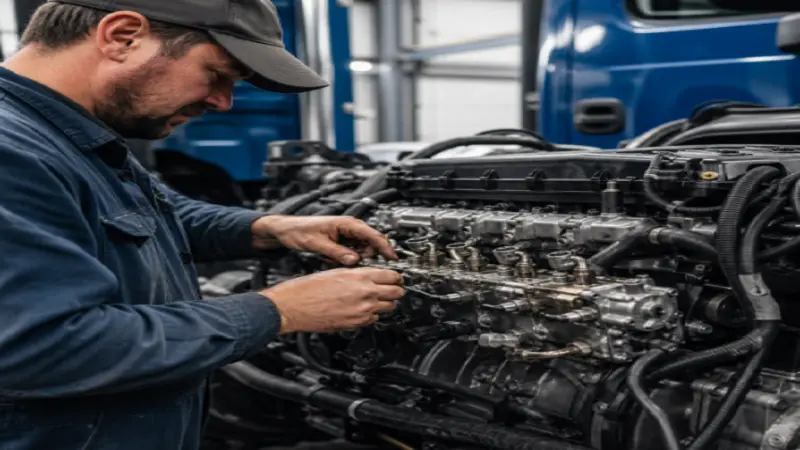
The fuel injection system sits at the heart of diesel engine performance, converting pressurized fuel into the fine mist that drives combustion. For operators of commercial trucks covering thousands of miles monthly, understanding how this system works and recognizing early signs of degradation can prevent roadside breakdowns and expensive emergency repairs. Unlike gasoline engines that rely on spark plugs, diesel engines depend entirely on precise fuel delivery and compression to generate power, making the injection system’s health directly tied to operational reliability.
How Diesel Fuel Injection Systems Differ From Gasoline Systems
Diesel injection operates under fundamentally different principles than gasoline fuel delivery. The system must generate pressures between 15,000 and 30,000 PSI in modern common rail systems, compared to roughly 60 PSI in typical gasoline setups. This extreme pressure atomizes the fuel into microscopic droplets that ignite when exposed to air heated by compression within the cylinder. The injection timing must be precise to within milliseconds, coordinating with piston position to maximize power output while controlling emissions.
Three main injection system architectures exist in commercial diesel engines. Mechanical systems use engine-driven pumps with purely mechanical timing control, common in older vehicles and equipment. Electronic systems add computer control to mechanical pumps, allowing dynamic timing adjustments based on load and temperature. Common rail systems separate pressure generation from injection events, using electronically controlled injectors fed by a high-pressure fuel rail. Each architecture has distinct maintenance requirements and failure modes.
Common Injection System Problems and Their Symptoms
Hard starting, especially when the engine is cold, often indicates weakening injection pump output or worn injector nozzles that fail to atomize fuel properly. The engine may crank extensively before firing, or require multiple attempts. Black smoke during acceleration suggests over-fueling from stuck injectors or incorrect pump timing, while white or gray smoke can indicate incomplete combustion from poor atomization or low compression. These visual cues provide early warnings before complete system failure.
Loss of power under load frequently stems from insufficient fuel delivery. An aging pump may struggle to maintain pressure at higher RPMs, causing the engine to feel flat when climbing grades or accelerating to highway speeds. Rough idle or misfiring points toward individual injector failures, where one or more cylinders receive inconsistent fuel delivery. Increased fuel consumption without corresponding power gains indicates efficiency loss somewhere in the injection pathway, often from internal pump wear or injector seal deterioration.
Sourcing Replacement Components for Commercial Vehicles
When injection system repairs become necessary, operators face decisions about new, rebuilt, or used components. New parts offer full warranties and the longest service life, but carry the highest upfront cost. Rebuilt components provide a middle ground, with worn elements replaced and the assembly tested to specification. Used parts from low-mileage donor vehicles can be cost-effective for older trucks where the full vehicle value doesn’t justify premium components. For critical applications like long-haul trucking, sourcing from suppliers who specialize in diesel systems ensures proper matching to engine specifications. Companies such as Goldfarb & Associates maintain inventory across these categories, allowing fleet managers to select an injector pump that balances budget constraints against reliability requirements for their specific operation.
The decision between component categories depends on vehicle age, annual mileage, and operational demands. A truck running regional routes with 150,000 miles might justify rebuilt components that will outlast the vehicle’s remaining service life. A million-mile highway tractor still generating revenue may warrant new components to minimize downtime risk. Understanding the trade-offs between initial cost and expected service life helps operators make financially sound decisions rather than simply choosing the lowest-priced option.
Preventive Maintenance That Extends Injection System Life
Fuel quality stands as the single most important factor in injection system longevity. Diesel fuel acts as both energy source and a lubricant for injection components, with modern ultra-low sulfur diesel providing less natural lubricity than older formulations. Running fuel through quality filtration catches particulates before they reach precision-machined components. Primary filters should be changed at manufacturer intervals, typically every 20,000 to 30,000 miles, with fuel-water separators drained weekly in humid climates or when running biodiesel blends that attract moisture.
Temperature management protects injection systems in extreme conditions. Winter operation below 15 degrees Fahrenheit can cause fuel gelling that starves the injection pump, while summer operation above 95 degrees increases wear rates on mechanical components. Using seasonally appropriate fuel blends and allowing engines to reach operating temperature before demanding full power reduces thermal shock to injectors. Avoiding extended idle periods prevents carbon buildup on injector tips, which disrupts spray patterns and reduces atomization efficiency.
The Role of Additives and Fuel Conditioning
Fuel additives serve specific purposes in diesel injection system maintenance. Lubricity improvers restore the protective film that ultra-low sulfur diesel lacks, reducing wear on pump components and injector needles. Cetane boosters improve ignition quality, reducing the mechanical stress of hard starts. Biocide treatments prevent microbial growth in fuel tanks, which can clog filters and corrode aluminum components. However, additives cannot compensate for contaminated fuel or neglected filtration, and excessive use of incompatible products can create new problems.
Environmental Regulations and Injection System Performance
Federal emissions standards have driven significant changes in diesel injection technology over the past two decades. Environmental Protection Agency regulations mandated progressive reductions in nitrogen oxide and particulate matter emissions, leading manufacturers to adopt high-pressure common rail systems with multiple injection events per combustion cycle. These systems achieve cleaner combustion but require more sophisticated maintenance and repair procedures than older mechanical designs.
The integration of exhaust gas recirculation, diesel particulate filters, and selective catalytic reduction systems creates interdependencies that affect injection system operation. A failing injector can overwhelm emissions controls with excess particulates, triggering regeneration cycles that waste fuel and reduce component life. Maintaining injection system health therefore supports the entire emissions control chain, preventing cascade failures that multiply repair costs. Diagnostic trouble codes related to injection timing, fuel pressure, or injector balance should be addressed promptly rather than cleared and ignored.
When to Repair Versus Replace Injection Components
Individual injector replacement makes economic sense when only one or two cylinders show problems and the remaining injectors test within specification. Full system overhauls become necessary when multiple components approach end of life simultaneously, typically after 300,000 to 500,000 miles depending on operating conditions. Pump replacement often coincides with major engine service intervals, allowing mechanics to address related components like timing gears and fuel lines during a single downtime event.
The availability of quality used and rebuilt parts has changed the repair calculus for older commercial vehicles. Sourcing OEM components from reputable suppliers ensures proper fit and performance without the premium attached to new parts. For trucks beyond their primary service life but still performing valuable secondary roles, these options extend operational viability while preserving capital for eventual replacement. The key lies in matching component quality to remaining vehicle value and expected service duration.
Building a Maintenance Schedule That Works
Effective injection system maintenance follows a tiered approach based on component criticality and failure modes. Daily walkaround inspections should include checking for fuel leaks around injector bases and pump fittings, which indicate seal failure. Weekly checks cover fuel-water separator drainage and visual fuel quality assessment. Monthly maintenance includes fuel filter replacement or evaluation, depending on mileage accumulation. Annual service should encompass injection timing verification, fuel pressure testing, and injector balance analysis on systems equipped with electronic controls.
Documentation provides the foundation for predictive maintenance. Recording fuel economy trends, oil analysis results, and performance metrics allows operators to detect gradual degradation before catastrophic failure occurs. A truck showing steady fuel economy decline over 50,000 miles likely has developing injection problems that warrant investigation, even without obvious symptoms. This data-driven approach reduces emergency repairs and allows maintenance to be scheduled during planned downtime rather than at roadside in the middle of a delivery run. See more Playbattlesquare!